Monday, 13 December 2010
The painful truth
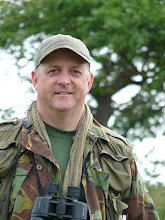
I was told it was about time that I updated my profile picture to one that was taken more recently. I'm told that the tired and saggy old bloke to the right is me! I think someone's telling porkies though. I can't possibly look that bad!

Wednesday, 8 December 2010
Three owls
Anyone who's read more than one of my posts (Is there anyone?) will probably know that little owls are one of my favourites. I can't resist them and, if I see one it almost invariably goes into the sketchbook or the camera.
Most of the time I like to paint birds as they go about their daily routines, unaware that they are being watched. Often, if viewing through binoculars or a scope, the birds will glance in my direction and decide that I'm far enough away that I don't constitute a threat and they will return to roosting or preening, safe in the knowledge that they could fly away in plenty of time if the situation demanded it. Just occasionally though it's nice to paint that point of contact with a bird, that moment of recognition and silent communication. This guy was perched in a yew tree behind the churchyard in Hucking. I'd stopped a good distance from the tree and scanned it with my binoculars and was lucky enough to spot the light patch of the owl's feathers where the sun reflected off of them. The owl had obviously seen me long before I'd seen him and he was watching intently. No binoculars needed! He didn't move off but he kept glancing at me, just literally keeping one eye on what I was up to, and what an eye!

This little painting is a bit of a landmark for me too because it is the first wildlife painting that I have completed in oils. I've enjoyed the paints and may use them in preference to acrylics in the future, I suppose that will depend on how well the next oil painting goes!
Owls as a group are so gorgeous to me that I sometimes wonder if I should call myself an owl artist who paints other wildlife from time to time. They are certainly a recurring theme in my work. They are not always the easiest of creatures to see though and despite knowing where there is a long eared owl roost it took literally years before I was able to spot this one. Long eared owl had become something of what birders call a 'bogey bird' for me. When I eventually did find him though he seemed content to pose for me almost as if I'd paid him! He was either confident that his camouflage was good enough to hide him or he was just too damn tired to move as his eyes barely opened beyond much more than a slit in all the time I watched him. Useful to me because I had plenty of time to do a detailed sketch which later became a painting.


Of course an owl's life is not all sleeping and roosting and another type of encounter that always thrills is one with a hunting owl. Using sketches done during my hour in a ditch back in May I wanted to show a barn owl hunting in territory familiar to me where I've often seen barn owls. In the early morning the sun is low enough in the sky that it lights up the feathery seed heads of the phragmite beds around the coastal marshes of Elmley and Oare. When a barn owl floats into the scene between the viewer and the sun it sometimes appears outlined in pure, white light an effect known as contre-jour, which is a French phrase meaning literally 'against the day'. A barn owl's body plumage is light enough that it will retain some detail even in these conditions, picking up reflected light from the ground and some of the light that filters through the translucent wing feathers. It is a beautiful and fleeting effect that artists have often exploited and one that I hope I've managed to capture some of in the painting 'Low light, low flight, highlight'.

Most of the time I like to paint birds as they go about their daily routines, unaware that they are being watched. Often, if viewing through binoculars or a scope, the birds will glance in my direction and decide that I'm far enough away that I don't constitute a threat and they will return to roosting or preening, safe in the knowledge that they could fly away in plenty of time if the situation demanded it. Just occasionally though it's nice to paint that point of contact with a bird, that moment of recognition and silent communication. This guy was perched in a yew tree behind the churchyard in Hucking. I'd stopped a good distance from the tree and scanned it with my binoculars and was lucky enough to spot the light patch of the owl's feathers where the sun reflected off of them. The owl had obviously seen me long before I'd seen him and he was watching intently. No binoculars needed! He didn't move off but he kept glancing at me, just literally keeping one eye on what I was up to, and what an eye!

This little painting is a bit of a landmark for me too because it is the first wildlife painting that I have completed in oils. I've enjoyed the paints and may use them in preference to acrylics in the future, I suppose that will depend on how well the next oil painting goes!
Owls as a group are so gorgeous to me that I sometimes wonder if I should call myself an owl artist who paints other wildlife from time to time. They are certainly a recurring theme in my work. They are not always the easiest of creatures to see though and despite knowing where there is a long eared owl roost it took literally years before I was able to spot this one. Long eared owl had become something of what birders call a 'bogey bird' for me. When I eventually did find him though he seemed content to pose for me almost as if I'd paid him! He was either confident that his camouflage was good enough to hide him or he was just too damn tired to move as his eyes barely opened beyond much more than a slit in all the time I watched him. Useful to me because I had plenty of time to do a detailed sketch which later became a painting.


Of course an owl's life is not all sleeping and roosting and another type of encounter that always thrills is one with a hunting owl. Using sketches done during my hour in a ditch back in May I wanted to show a barn owl hunting in territory familiar to me where I've often seen barn owls. In the early morning the sun is low enough in the sky that it lights up the feathery seed heads of the phragmite beds around the coastal marshes of Elmley and Oare. When a barn owl floats into the scene between the viewer and the sun it sometimes appears outlined in pure, white light an effect known as contre-jour, which is a French phrase meaning literally 'against the day'. A barn owl's body plumage is light enough that it will retain some detail even in these conditions, picking up reflected light from the ground and some of the light that filters through the translucent wing feathers. It is a beautiful and fleeting effect that artists have often exploited and one that I hope I've managed to capture some of in the painting 'Low light, low flight, highlight'.

Tuesday, 12 October 2010
Merlin defiant

On the afternoon of September 7th 1940 the phone rang in the dispersal hut at RAF Martlesham. 257 Squadron were scrambled to intercept an incoming force of enemy aircraft. For the fourth time that day Flight Lieutenant Hugh ‘Blue blood’ Beresford raced to his waiting Hurricane and fired up its powerful Rolls-Royce Merlin engine. He was quickly airbourne leading ‘A’ Flight. Out over the Thames Estuary 257 Squadron were vectored in on a flight of 50 German bombers and they met them head-on. As Flight Lieutenant Beresford began his attack an Me.109 fighter escort swept down from altitude to attack the defiant 257 Squadron and defend their own bombers. Flight Lieutenant Beresford frantically called a warning to his comrades below him; “Alert Squadron! Four snappers coming down!” These were probably his last words as he was hit by a cannon shell fired by one of the 109’s and his aircraft fell away from the squadron and plunged earthwards.
On the quiet marshland of Elmley on the Isle of Sheppey the Hurricane struck the ground at Spitend. Impacting nose first the aircraft disappeared into the marshy soil leaving just a small crater and two slashes where the wings had hit and sliced into the soft ground. There was no explosion, no flames nothing but a small wisp of smoke or steam drifting up from out of the hole.
For the next 39 years Flight Lieutenant Beresford remained in the cockpit of his Hurricane, buried 4-5 metres below the surface. Then, in August 1979 a team of volunteers recovered the aircraft and the pilot’s mortal remains along with a few remnants of his personal effects. Hugh Beresford was finally laid to rest, with full military honours, in the Brookwood military cemetery in Surrey.
On the day he died back in 1940 Hugh Beresford was just 24 years old, the same age as my eldest son.
Last year I was on Elmley one quiet Sunday morning in the middle of summer. There were swallows skimming low and skylarks singing high against the azure sky which was broken only by the contrails of even higher flying planes.
As I looked at the patterns of criss-crossing vapour trails the thought struck me that I could have been transported back to the 1940's when the skies above Kent were the scene of fierce fighting as the RAF fought the threat of Nazi invasion and the might of Hitler's Luftwaffe. Even as these battles raged, and brave young men of both sides lost their lives, the birds on the marshes of Sheppey continued, just as they have always done, oblivious to the struggles of men.
In early September this year I was lucky enough to catch up with a merlin on Elmley and the thought of the summer of 1940 returned to me and this painting was conceived. The Rolls Royce Merlin engine powered both the Spitfire and the Hurricane so I thought it would be an appropriate bird to place in the context of the Battle of Britain. The young male sits on a pile of boulders which are not naturally occuring in Kent. They have been brought in to be used in the coastal defences, so again I thought they were appropriate. I have used a little artistic license and the fighter planes depicted are Spitfires not Hurricanes simply because the shape of the Spitfire is more easily recognisable.
Wednesday, 21 July 2010
CLA Game Fair
I will be attending the CLA Game Fair at Ragley Hall in Warwickshire this weekend, Friday 23rd-Sunday 25th July. I'll be in the 'Birds, birds, birds' Stand P1213, where some of my work will be on show. If you're at the fair please do come and have a chat, it would be nice to meet anyone who reads this little blog of mine.
Gotta go pack!
Gotta go pack!
Saturday, 10 July 2010
Fairy whispers and chasing dragons
The weatherman had promised cloud after a week of pure blue skies and soaring temperatures. But he was wrong. The sky was clear and the air had the delicious taste of a morning's clarity before it thickens to hang heavy with the sun's heat.
Always at this time of year I hope to see Hobbies on my travels. Those dashing little falcons like miniature peregrines with every edge honed to sharpness. So my first port of call was the old schoolhouse to scan the familiar territory of the resident pair. However there was no sign of them, either on their favourite perches or in the empty sky. I stayed for over an hour and, as the sun worked her magic, the temperature began to rise and the air began to hum and buzz with the busyness of insects. The horizon became a shimmering, ephemeral thing and looking for distant Hobbies through the heat haze was like trying to see through a pane of glass running with the heavyest of heavy rain. The air thickened, as I'd known it would, and took on the heat of those near forgotten dream Summers of my childhood.
As I went down the track that leads back down to the farmhouse the bushes to the sides were moving. Each twig and leaf it seemed was a perch for a smiling, bejewelled, yellow dragon and my passing put them to the air. Their glasslike wings whirred and clattered, maneuvering them to perceived safety on a branch perhaps a foot or so away from their first position. Benign to us but snatching death to their small insect prey, these grinning beauties are superb fliers, twisting, turning, banking and hovering with perfect precision. But even such mastery cannot always save them. The Hobbies that fly here hunt these hunters, grabbing them in swift talons and deftly removing their leaded glass wings before offering them up to the sharp and decisive beak to be devoured in flight with barely an interruption. The yellow dragons (Common Darters) are the most numerous dragonflies on the reserve but there are others there too. Azure damselflies with their needle thin bodies glowing in blue as bright as Chinese turquoise, and delicate, irridescent, green/blue Banded Demoiselles with their distinctive black wingspots always seeking the bottle green and spotless females. And the larger Black-Tailed skimmer, dusky blue and impressive but they are all dwarfed by the massive Migrant Hawker.

Common Darter

Azure Damselfly

Banded Demoiselle

Black-Tailed Skimmer

Migrant Hawker
The heat brought other creatures to the brambles, nettles and thistles; A huge hatch of meadow brown butterflies in even greater profusion than the dragonflies. Understated, velvet-winged and beautiful they adorned the undergrowth in their thousands. As I walked by they lifted and fluttered all around me and I was surrounded by a cloud of Summer with wings as soft as the whispers of fairy secrets. Moving on, the cloud of butterflies seemed to move along with me as some settled and others took their places in the dance. There is only one way to describe encounters like this; Pure Magic.

Meadow Browns
Enchanted by the meadow browns and heady with the Summer I sought out other butterflies and was rewarded with a glorious Small Tortoiseshell basking in the sun. His bright colours shone like sweets in a glass jar against the grey stone gravel of the path. A Large White was busy among the brambles and nettles by the path. As she fluttered from one bramble to another it was almost as if one of the pure white blooms of the bramble itself had taken to flight. And finally atop a giant thistle, a comma, ragged edged wings radiant in burnished copper, he drank nectar with his elegantly caligraphic tongue.

Small Tortoiseshell

Large White

Comma
The Hobbies never did show, but it didn't matter because, like the butterflies, I had tasted the sweet nectar of Summer and, anyway, I knew that they were out there somewhere in the vast open sky...Chasing dragons.

High Summer Hobby
Always at this time of year I hope to see Hobbies on my travels. Those dashing little falcons like miniature peregrines with every edge honed to sharpness. So my first port of call was the old schoolhouse to scan the familiar territory of the resident pair. However there was no sign of them, either on their favourite perches or in the empty sky. I stayed for over an hour and, as the sun worked her magic, the temperature began to rise and the air began to hum and buzz with the busyness of insects. The horizon became a shimmering, ephemeral thing and looking for distant Hobbies through the heat haze was like trying to see through a pane of glass running with the heavyest of heavy rain. The air thickened, as I'd known it would, and took on the heat of those near forgotten dream Summers of my childhood.
As I went down the track that leads back down to the farmhouse the bushes to the sides were moving. Each twig and leaf it seemed was a perch for a smiling, bejewelled, yellow dragon and my passing put them to the air. Their glasslike wings whirred and clattered, maneuvering them to perceived safety on a branch perhaps a foot or so away from their first position. Benign to us but snatching death to their small insect prey, these grinning beauties are superb fliers, twisting, turning, banking and hovering with perfect precision. But even such mastery cannot always save them. The Hobbies that fly here hunt these hunters, grabbing them in swift talons and deftly removing their leaded glass wings before offering them up to the sharp and decisive beak to be devoured in flight with barely an interruption. The yellow dragons (Common Darters) are the most numerous dragonflies on the reserve but there are others there too. Azure damselflies with their needle thin bodies glowing in blue as bright as Chinese turquoise, and delicate, irridescent, green/blue Banded Demoiselles with their distinctive black wingspots always seeking the bottle green and spotless females. And the larger Black-Tailed skimmer, dusky blue and impressive but they are all dwarfed by the massive Migrant Hawker.

Common Darter

Azure Damselfly

Banded Demoiselle

Black-Tailed Skimmer

Migrant Hawker
The heat brought other creatures to the brambles, nettles and thistles; A huge hatch of meadow brown butterflies in even greater profusion than the dragonflies. Understated, velvet-winged and beautiful they adorned the undergrowth in their thousands. As I walked by they lifted and fluttered all around me and I was surrounded by a cloud of Summer with wings as soft as the whispers of fairy secrets. Moving on, the cloud of butterflies seemed to move along with me as some settled and others took their places in the dance. There is only one way to describe encounters like this; Pure Magic.

Meadow Browns
Enchanted by the meadow browns and heady with the Summer I sought out other butterflies and was rewarded with a glorious Small Tortoiseshell basking in the sun. His bright colours shone like sweets in a glass jar against the grey stone gravel of the path. A Large White was busy among the brambles and nettles by the path. As she fluttered from one bramble to another it was almost as if one of the pure white blooms of the bramble itself had taken to flight. And finally atop a giant thistle, a comma, ragged edged wings radiant in burnished copper, he drank nectar with his elegantly caligraphic tongue.

Small Tortoiseshell

Large White

Comma
The Hobbies never did show, but it didn't matter because, like the butterflies, I had tasted the sweet nectar of Summer and, anyway, I knew that they were out there somewhere in the vast open sky...Chasing dragons.

High Summer Hobby
Monday, 7 June 2010
BBC Wildlife Magazine Wildlife Artist of the year 2010

I was very pleased to find out that my painting 'Too late!' had won the 'British Birds' category of the BBC Wildlife Magazine Wildlife Artist of the year competition 2010. It's a huge honour to have been judged the winner in this hard-fought category and I don't think I've stopped grinning since I heard.
The painting will be exhibited at Marwell later in the year along with the other category winners which include my friends, Tim Wootton for the 'World Birds' category and Nick Derry for the 'Visions of Nature' category. Congratulations to the both of them.
Wednesday, 12 May 2010
By way of a change-Some paintings
I thought it was about time that I posted a few paintings here so that everyone can see that I have actually been doing some work.
First up is the most recent piece; 'New neighbours'. Inspired by the return of the yellow wagtails over the last few weeks it shows a resting hare with a somewhat disdainful look as he watches the new neighbour busily searching for insects among the vivid green grass of late spring.
 New Neighbours
I have been experimenting with water lately and the next piece, 'Liquid sky', is part of that exploration. It shows a black headed gull floating on some of the bluest water I've ever seen. Water is a reflective surface and on days of bright sunshine and clear skies the intense blue of the sky is mirrored on the open water. This painting is mainly about the patterns that appear as the water ripples and breaks the reflection into fleeting shapes.
 Liquid sky
Just as the water reflects the blue of a clear sky it also echoes the grey of cloud cover and this effect can be seen in the next painting, 'Two islands' The wind breaks the reflection into fragments as it ruffles the surface in a completely different way to the last picture. The two tatty little islands appealed to me in some way that I can't really explain and I added the mallard pair sheltering from the wind as interest to others.
 Two islands
'Otter House' was a commissioned piece and it shows an otter as she pauses at the end of a garden that backs onto a river. One day I hope to own a property like that! The reflections in this painting are of the opposite bank and are consequently green.
 Otter House
Nature provides a myriad of moods. Resting birds seem to embody calm and when water is involved the scene can take on a quietness that we can all relate to and need to experience for ourselves from time to time if only to escape from the babble of modern living. This stillness is the effect I tried to achieve with the next painting 'Still snipe'.
 Still snipe
Similarly it is not difficult for us to identify when normally busy birds like the ringed plover in the painting 'A short pause' decide to stop for a while and enjoy the feel of the warm sun on their backs.
 A short pause
Other birds will continue on as always, even in the heat of the summer sun. The air shimmers and insects flicker over the dried mudpile that this stonechat uses as a perch completing the 'Sun, mud and stone' of the title. Again, this is an impressionistic painting done to try capturing the feel of the scene as experienced and an exploration of the effects of light.
 Sun, mud, stone
Another recent painting inspired by one of my trips to the Elmley reserve is 'The potterer'. Redshank are all staccato movement, short, sharp and very 'birdlike'. In spring they can be seen twitching around in the puddles of flooded fields left by heavy, late winter rains. Tips of grass and dock poke through the puddles in a random array echoing the bird's movement and the bottom of the puddle can be seen through the shallow water.
 The potterer
More puddles in the painting 'Proceed with caution'. Like a military patrol this group of four red legged partridges steps carefully and keeps a wary eye open for ambush as they proceed along a muddy track. Perhaps they were previously on the receiving end of the shot from the cartridge discarded in the grass.
 Proceed with caution
 Too late!
First up is the most recent piece; 'New neighbours'. Inspired by the return of the yellow wagtails over the last few weeks it shows a resting hare with a somewhat disdainful look as he watches the new neighbour busily searching for insects among the vivid green grass of late spring.
 New Neighbours
 Liquid sky
Just as the water reflects the blue of a clear sky it also echoes the grey of cloud cover and this effect can be seen in the next painting, 'Two islands' The wind breaks the reflection into fragments as it ruffles the surface in a completely different way to the last picture. The two tatty little islands appealed to me in some way that I can't really explain and I added the mallard pair sheltering from the wind as interest to others.
 Two islands
'Otter House' was a commissioned piece and it shows an otter as she pauses at the end of a garden that backs onto a river. One day I hope to own a property like that! The reflections in this painting are of the opposite bank and are consequently green.
 Otter House
 Still snipe
Similarly it is not difficult for us to identify when normally busy birds like the ringed plover in the painting 'A short pause' decide to stop for a while and enjoy the feel of the warm sun on their backs.
 A short pause
Other birds will continue on as always, even in the heat of the summer sun. The air shimmers and insects flicker over the dried mudpile that this stonechat uses as a perch completing the 'Sun, mud and stone' of the title. Again, this is an impressionistic painting done to try capturing the feel of the scene as experienced and an exploration of the effects of light.
 Sun, mud, stone
Another recent painting inspired by one of my trips to the Elmley reserve is 'The potterer'. Redshank are all staccato movement, short, sharp and very 'birdlike'. In spring they can be seen twitching around in the puddles of flooded fields left by heavy, late winter rains. Tips of grass and dock poke through the puddles in a random array echoing the bird's movement and the bottom of the puddle can be seen through the shallow water.
 The potterer
More puddles in the painting 'Proceed with caution'. Like a military patrol this group of four red legged partridges steps carefully and keeps a wary eye open for ambush as they proceed along a muddy track. Perhaps they were previously on the receiving end of the shot from the cartridge discarded in the grass.
 Proceed with caution
Finally a more dramatic painting; 'Too late'. I'm lucky enough to encounter wild peregrines fairly regularly and have seen them diving into flocks of lapwing hoping to cause panic and strike the unwary. This lapwing has not been paying attention and it's now too late.
I'm pleased to say that this painting has recently been shortlisted to the final round of judging for the BBC wildlife artist of the year competition. This is the second year that I have had work accepted for this competition and it's an achievement that I am very proud of. Too late!
Subscribe to:
Comments (Atom)